Are APK Files Legal? Complete Guide to APK Laws, Copyright Issues, Piracy Risks, and Safe Alternatives
Description
APK files are widely used by Android users around the world. Many people download APK files to install apps manually, access older versions, use beta releases, or install apps unavailable in their region. Because APK files are so common, many users ask an important question: Are APK files legal?
The answer is not always simple. APK files themselves are not illegal because they are simply Android application packages used for installing apps. However, the legality of an APK depends on where it comes from, how it is distributed, whether it has been modified, and whether it violates copyright laws.
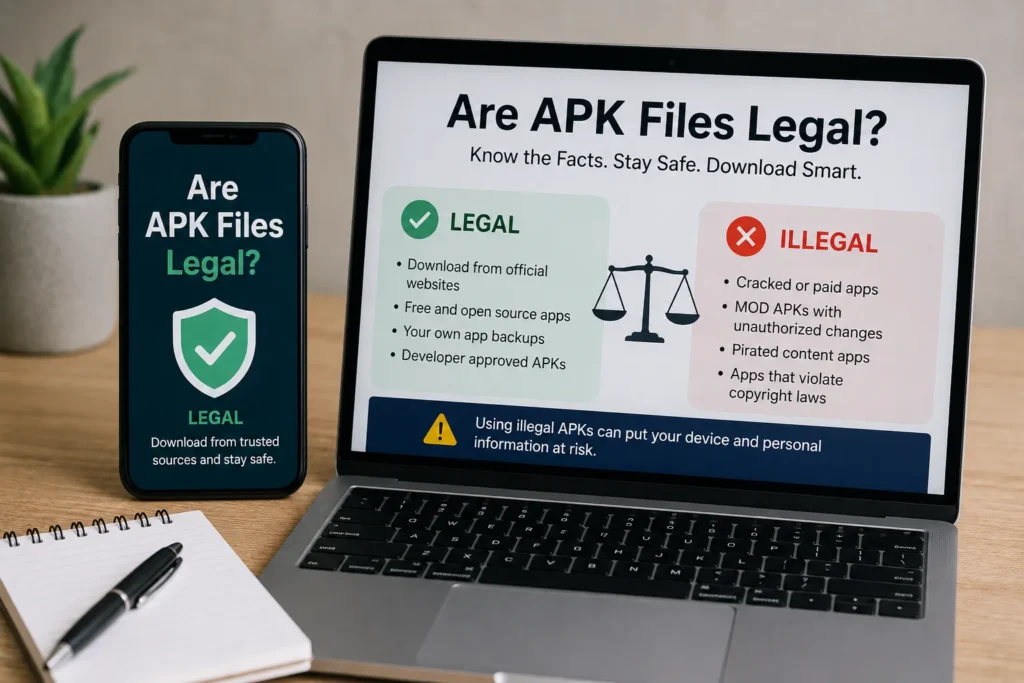
Some APK downloads are completely legal and safe, while others may involve piracy, unauthorized modifications, or copyright infringement. Users who download illegal APK files may face security risks, account bans, malware infections, and even legal consequences in certain countries.
This complete guide explains APK legality, legal and illegal APK sources, copyright concerns, developer rights, APK piracy, country-specific laws, and safer alternatives for Android users.
APK File Legality Explained
APK stands for Android Package Kit. It is the official file format Android uses to distribute and install mobile applications.
APK files themselves are not illegal. Android devices are designed to install apps using APK packages. Even apps downloaded from the Google Play Store are technically installed through APK-related systems.
The legality depends on factors such as:
- Who created the APK
- Whether the APK is modified
- How it is distributed
- Whether copyright permission exists
Whether paid content is bypassed
Legal APK Usage
APK files are generally legal when:
- Distributed by official developers
- Shared with permission
- Used for personal app installation
- Offered through trusted platforms
- Not modified illegally
Examples include:
- APKs from official developer websites
- Open-source Android apps
- Beta testing releases
Backup APKs from personal devices
Here is an example of Apk files: PAK500 Game
Illegal APK Usage
APK files may become illegal when:
- Paid apps are distributed for free illegally
- Copyright protections are bypassed
- Apps are modified without permission
- Pirated software is shared
- Premium subscriptions are unlocked illegally
The file format itself is not illegal, but illegal distribution creates legal problems.
Legal APK Sources
Many APK sources operate legally and safely.
Official Developer Websites
Some developers offer APK downloads directly from their websites.
This is one of the safest and most legal APK sources.
Examples include:
- Beta app testing
- Region-restricted app access
- Open-source software downloads
Open-Source Platforms
Open-source Android apps are often distributed legally through APK files.
Developers intentionally allow users to install apps manually.
Authorized APK Repositories
Certain APK repositories verify apps and maintain security standards.
Trusted platforms may:
- Verify signatures
- Check developer authenticity
- Scan for malware
Maintain version histories
Personal APK Backups
Users may legally back up APK files from apps they already own.
However, redistributing those files publicly may create legal issues.
Illegal APK Examples
Some APK files clearly violate copyright or developer rights.
Cracked Paid Apps
One of the most common illegal APK categories is cracked applications.
These APKs bypass payment systems to unlock premium features for free.
Examples include:
- Paid games unlocked for free
- Premium subscriptions removed
- License verification bypassed
Pirated Streaming Apps
Illegal APKs may distribute copyrighted media without permission.
These apps sometimes provide:
- Unauthorized movies
- Pirated TV shows
- Illegal sports streams
MOD APKs with Unauthorized Changes
Some MOD APKs modify games or apps without developer permission.
Illegal modifications may include:
- Unlimited money hacks
- Removed advertisements
- Premium features unlocked
Fake Applications
Some illegal APKs impersonate legitimate apps.
These fake apps may:
- Steal user information
- Spread malware
Collect passwords
Copyright Issues
Copyright laws protect app developers and their software.
What Is Copyright?
Copyright gives creators legal ownership over their work.
Android apps are protected intellectual property.
Developers control:
- Distribution rights
- Modification rights
Monetization rights
How APK Piracy Violates Copyright
Pirated APKs often copy and redistribute apps without permission.
This violates developer rights because:
- Developers lose revenue
- Licensing systems are bypassed
Unauthorized copies spread online
Unauthorized Modifications
MOD APK creators may alter app code illegally.
Unauthorized changes can violate:
- Copyright law
- Licensing agreements
- Terms of service
Developer Rights
Android app developers have important legal protections.
Rights Developers Usually Have
Developers typically control:
- App distribution
- Monetization
- Modification permissions
- Update systems
- Branding
Why Developer Rights Matter
Developers spend time and money creating applications.
Illegal APK distribution may harm:
- Revenue
- Business reputation
- App security
User trust
How Developers Protect Their Apps
Many developers use:
- License verification
- Anti-piracy systems
- Encryption
- Server-side checks
Legal enforcement
APK Piracy
APK piracy refers to illegal copying or sharing of Android apps.
Common Types of APK Piracy
Cracked Premium Apps
Paid apps distributed for free illegally.
MOD APK Distribution
Modified apps shared without permission.
Subscription Unlock APKs
Apps are bypassing paid memberships illegally.
Repackaged APK Files
Apps were modified and redistributed under different names.
Why APK Piracy Is Risky
Pirated APKs often contain:
- Malware
- Spyware
- Fake login systems
- Hidden tracking
Pirated APK websites are among the highest-risk download categories.
Country-Specific Laws
APK legality may vary depending on local laws.
United States
Copyright law strongly protects software creators.
Distributing pirated APKs may violate:
- Copyright Act
- Digital Millennium Copyright Act (DMCA)
European Countries
Many European countries enforce intellectual property protections.
Illegal APK distribution may result in:
- Fines
- Legal notices
- Website takedowns
Asian Countries
Rules vary significantly across Asia.
Some countries enforce strict anti-piracy laws, while others have weaker enforcement.
Pakistan and Other Developing Markets
APK usage is extremely common in many developing countries.
However, copyright protections may still apply to pirated software distribution.
Illegal APK downloads create both legal and security risks.
Malware Risks
Pirated APKs often contain harmful software.
Possible threats include:
- Banking trojans
- Spyware
- Adware
- Ransomware
Data Theft
Dangerous APKs may steal:
- Passwords
- Photos
- Contacts
- Banking information
Account Bans
Gaming companies may ban users for using modified APKs.
Privacy Violations
Illegal APKs may track user activity secretly.
Device Performance Problems
Malicious APKs may cause:
- Battery drain
- Overheating
- Device slowdown
Frequent crashes
Legal Consequences
Large-scale APK piracy operations may face legal action.
Regular users rarely face severe penalties, but risks still exist.
Legal Alternatives
Users can enjoy Android apps legally through safer alternatives.
Google Play Store
The safest official Android app marketplace.
Benefits include:
- Malware scanning
- Automatic updates
- Developer verification
Official Developer Websites
Many developers offer legal APK downloads directly.
Open-Source Apps
Open-source Android apps provide free and legal alternatives.
Freemium Apps
Many apps offer free versions with optional premium upgrades.
Subscription Discounts
Instead of pirated APKs, users may access:
- Student discounts
- Family plans
- Seasonal promotions
How to Stay Safe When Downloading APK Files
Users should follow safe practices.
Download Only from Trusted Sources
Avoid suspicious APK websites.
Scan APK Files Before Installing
Virus scanning helps detect threats.
Avoid Cracked APKs
Cracked apps carry the highest risks.
Check App Permissions
Review permissions carefully before installation.
Keep Android Updated
Security updates improve device protection.
Conclusion
APK files are an important part of the Android ecosystem and are not automatically illegal. Millions of users install APK files legally for beta testing, open-source apps, app backups, and official developer downloads.
However, APK legality depends on how the files are distributed and used. Cracked paid apps, unauthorized MOD APKs, pirated streaming applications, and illegally modified software may violate copyright laws and developer rights.
In addition to legal concerns, illegal APK downloads often introduce serious security risks, including malware, spyware, fake login screens, and data theft.
Users who want a safer Android experience should use trusted APK sources, avoid pirated apps, scan files for viruses, and respect developer rights whenever possible.
Frequently Asked Questions
- Are APK files legal?
Yes, APK files themselves are legal.
- Are MOD APKs illegal?
Some MOD APKs may violate copyright laws or terms of service.
- Is downloading paid APKs for free illegal?
In many cases, yes.
- Can illegal APKs contain malware?
Yes, pirated APKs often carry malware risks.
- Are APK backups legal?
Personal backups are usually legal, but redistribution may not be.
- Can I get banned for using MOD APKs?
Some games and apps ban users for unauthorized modifications.